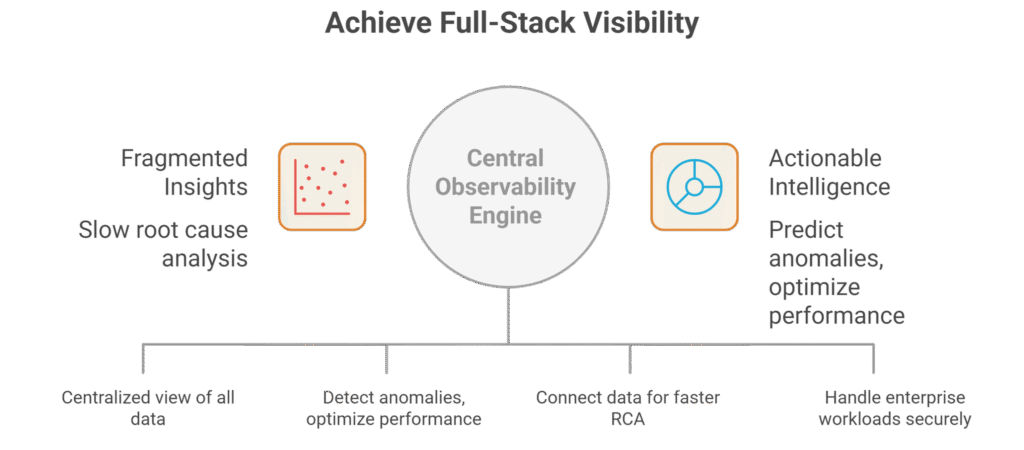
Full-stack visibility for enterprise systems.
The Case for Data-Centric Observability
Enterprises today generate massive volumes of logs, events, and metrics across applications, databases, networks, and cloud platforms. Without a central observability engine, IT teams struggle with fragmented insights, slow root cause analysis, and higher operational risks.
A data-centric observability engine ensures that all telemetry is captured, correlated, and contextualized in one place. It provides the intelligence to move beyond simple monitoring — enabling IT leaders to see patterns, predict anomalies, and optimize infrastructure performance with confidence.
Key Capabilities
Data-Centric Observability: Turning raw data into actionable enterprise intelligence.
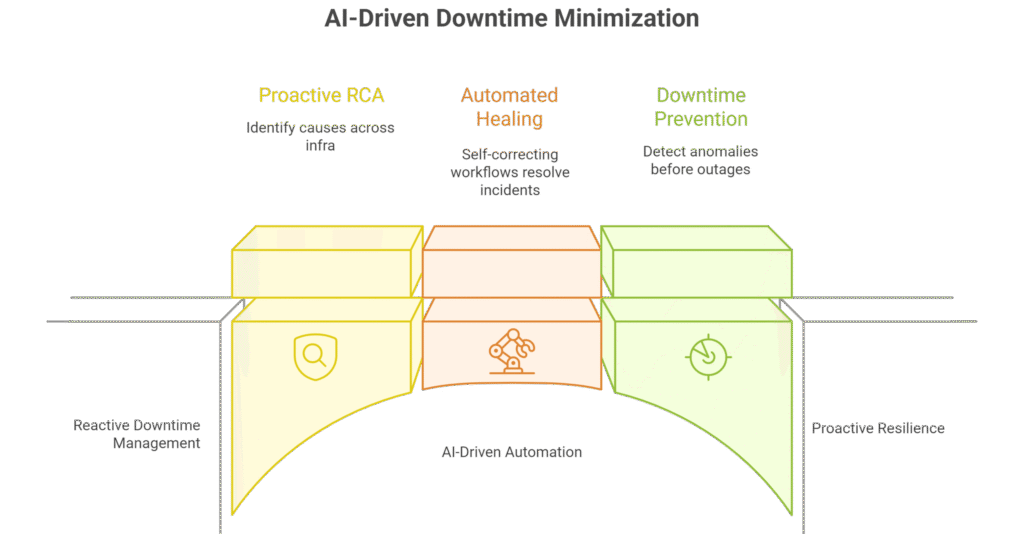
Proactive RCA and automated healing.
The Case for Minimizing Downtime
Downtime is more than lost availability — it means lost revenue, reduced customer trust, and higher compliance risk. In industries like BFSI, telecom, and government, even a few minutes of service disruption can have cascading effects. Traditional monitoring is reactive, forcing IT teams to fix issues only after they’ve impacted operations.
By embedding AI-driven Root Cause Analysis (RCA) and automated healing, enterprises can shift from reactive firefighting to proactive resilience. Instead of waiting for outages, systems can detect anomalies early, trigger self-healing workflows, and keep services always-on, reducing MTTR and operational costs.
Key Capabilities
Minimize Downtime: From firefighting to future-ready resilience.
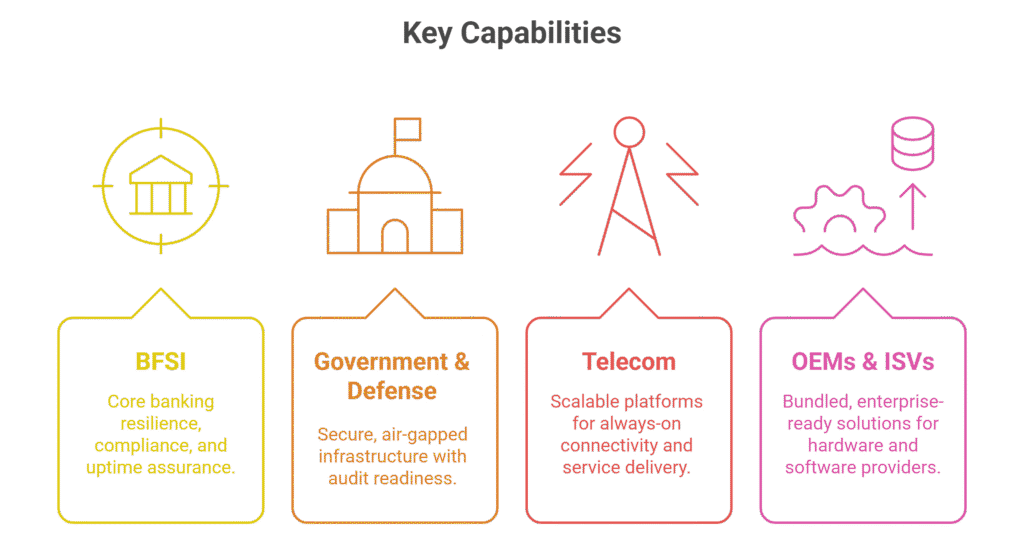
BFSI, Government, Telecom, OEMs.
The Case for Cross-Industry Innovation
Every industry faces unique infrastructure challenges — from real-time transactions in BFSI, to mission-critical uptime in government and defense, to high-volume connectivity in telecom, and scalable solutions for OEMs. While the needs differ, the underlying demand is the same: resilient, intelligent, and compliant infrastructure.
By applying AI-powered observability, compliance automation, and auto-healing across domains, QPH helps enterprises transform infrastructure from a cost center into a driver of innovation. Instead of just keeping the lights on, organizations can leverage intelligent platforms to unlock new efficiencies, faster decision-making, and long-term growth.
Key Capabilities
Driving Innovation: Turning infrastructure intelligence into industry transformation.
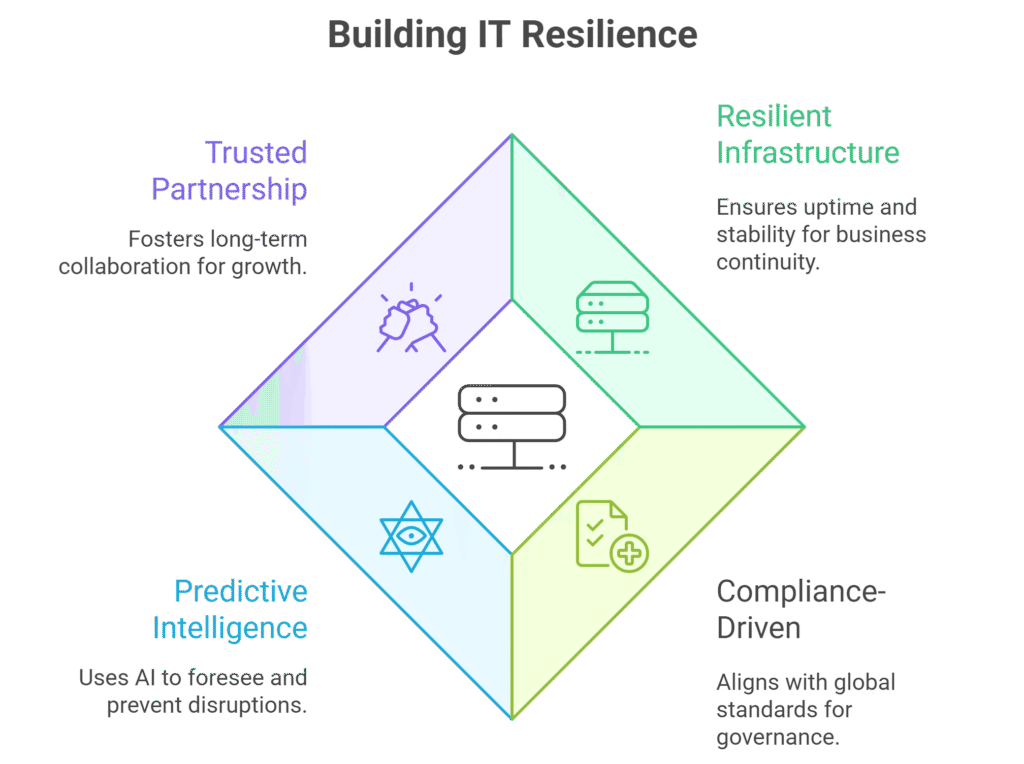
Secure IT Solutions for Stability, Growth, and Compliance.
The Case for IT Resilience
Enterprises today operate in an environment where downtime, cyber threats, and compliance gaps can directly impact growth and customer trust. IT resilience is no longer just about disaster recovery — it is about ensuring stability, agility, and compliance every single day.
As a trusted partner, QPH enables organizations to build resilient IT ecosystems through observability, auto-healing, compliance automation, and predictive analytics. This means enterprises can anticipate risks, adapt to change, and grow confidently, knowing their infrastructure is always secure and audit-ready.
Key Capabilities
IT Resilience: Not just protection, but confidence to scale and grow.