
The Business Challenge — Fragile Core Banking Infrastructure
Core banking platforms process millions of daily transactions — from ATM withdrawals and real-time payments to end-of-day settlement batches.
But in high-volume environments, even a minor infrastructure fault can trigger costly disruptions.
Current Pain Points:
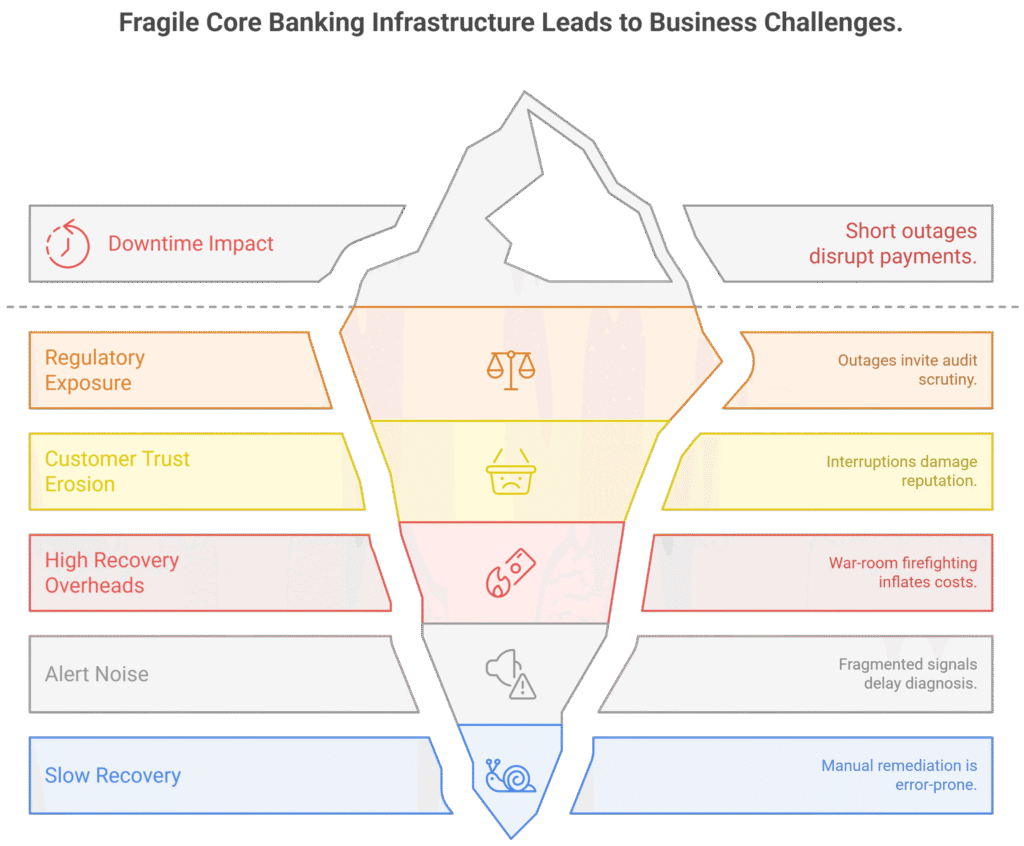
Downtime Impact: Even short outages disrupt payments, delay settlements, and breach SLAs.
Regulatory Exposure: Outages invite audit scrutiny, compliance penalties, and risk flags.
Customer Trust Erosion: Interruptions damage reputation and drive attrition.
High Recovery Overheads: War-room firefighting inflates operational costs.
Alert Noise, No Root Cause: Siloed monitoring tools flood teams with fragmented signals, delaying diagnosis.
Slow, Manual Recovery: Human-led remediation is error-prone and unfit for always-on banking.
Banks need a self-reliant remediation layer that can detect, isolate, and resolve incidents in real time — before they impact customers or regulators.
Real-World Scenario — When Banking Comes to a Standstill
A leading commercial bank experienced this during peak hours:
Transaction switch nodes started failing intermittently under load
Multiple tools triggered thousands of uncorrelated alerts
NOC and L2 teams were overwhelmed, delaying triage
Customer transactions timed out, settlement queues grew
Compliance teams flagged SLA breaches and risk escalation
With no clear root cause and no automated fallback, every minute of downtime risked millions in lost revenue and reputational damage.
The QPH Approach — Autonomous Remediation via IPH
QPH deployed its flagship IntelliPulse HUB (IPH) to build a self-healing infrastructure fabric around the bank’s core payment systems.
Key Capabilities Delivered:
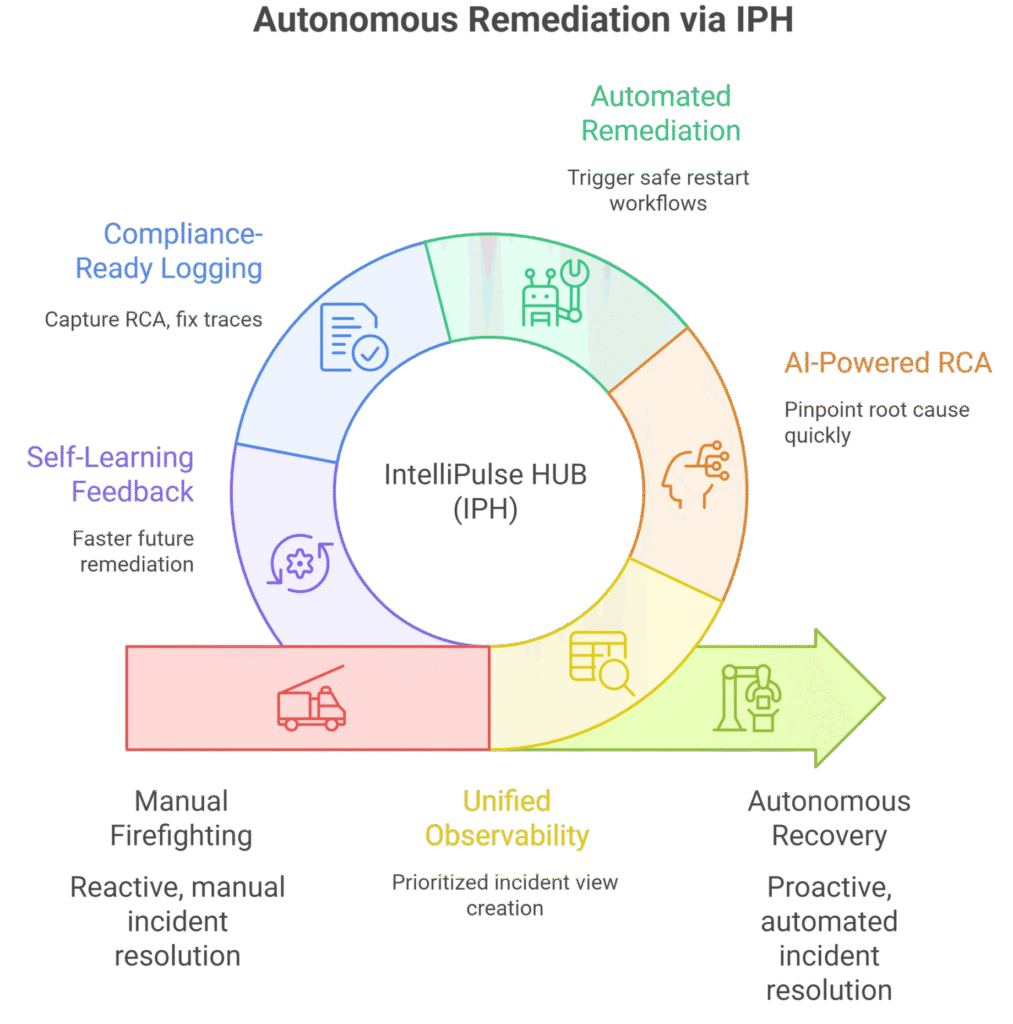
Unified Observability: Correlated thousands of noisy alerts into a single, prioritized incident view
AI-Powered Root Cause Analysis: Pinpointed a misconfigured middleware node within minutes
Automated Remediation Playbooks: Triggered safe restart and cluster rebalance workflows without human intervention
Compliance-Ready Logging: Captured full RCA, fix traces, and audit logs for regulatory reporting
Self-Learning Feedback Loop: Fed incident learnings back into IPH’s knowledge graph for faster future remediation
This approach shifted the bank’s operations from manual firefighting to autonomous recovery.
Business Outcomes — From Disruption to Continuity
Within minutes, the bank restored full service and avoided regulatory breach reporting.
Measurable Benefits:
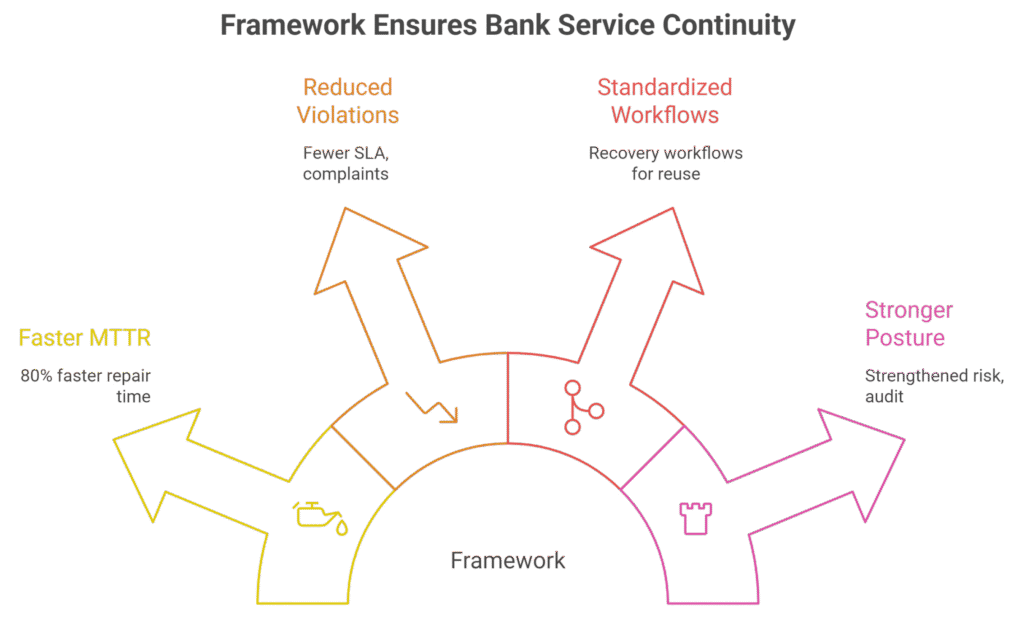
80% faster Mean Time to Repair (MTTR) during the incident
Significant reduction in SLA violations and customer complaints
Standardized recovery workflows for future reuse
Strengthened operational risk posture and audit readiness
The same framework now protects EOD settlement, payment switches, and middleware clusters from future disruptions — ensuring continuity at scale.
Key Takeaway