
Databases power the backbone of every digital enterprise — from core banking and payments to customer-facing digital platforms, financial reporting, and mission-critical enterprise applications.
For regulated sectors like BFSI, Insurance, and Telecom, database outages can instantly halt operations, disrupt customer transactions, trigger compliance violations, and cause cascading financial risk.
In today’s always-on environment, “database downtime” is no longer just an IT issue — it is a board-level risk.
Yet traditional DBA-driven approaches often focus on narrow performance tuning rather than end-to-end availability, resilience, and compliance readiness.
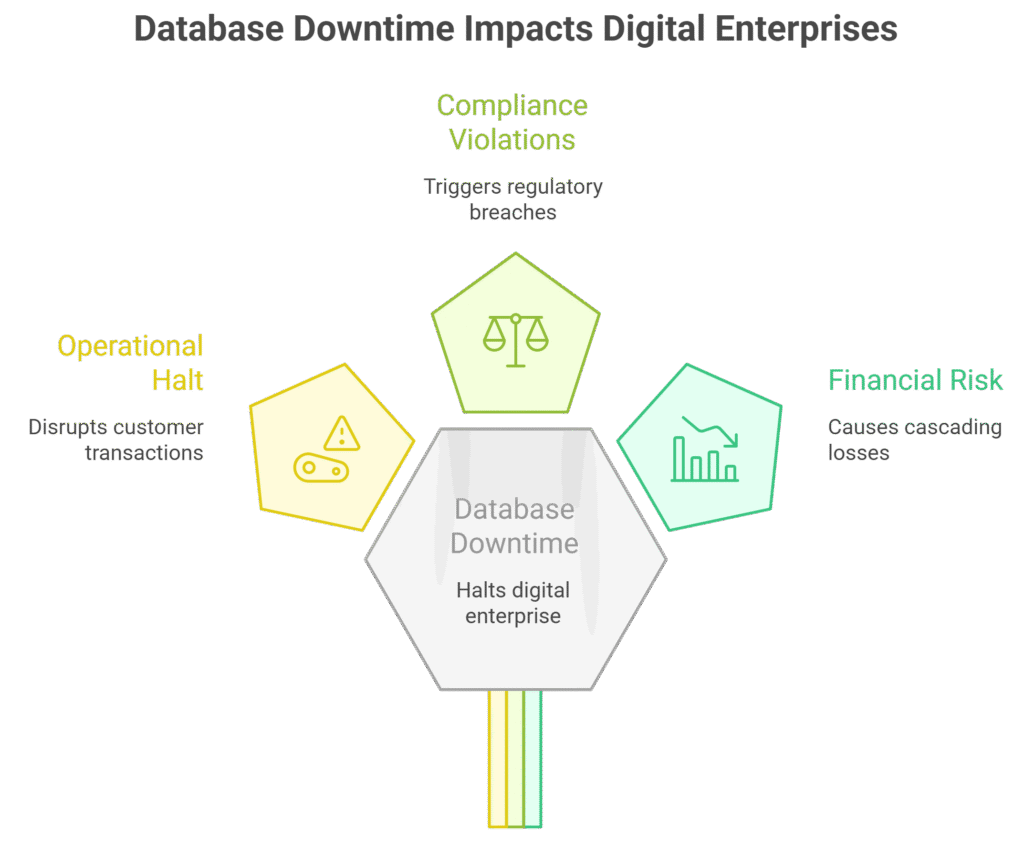
Even in mature enterprises, database environments carry silent failure points that surface at the most critical windows — during EOD batch runs, regulatory reporting cycles, financial year-end loads, or disaster recovery (DR) drills.
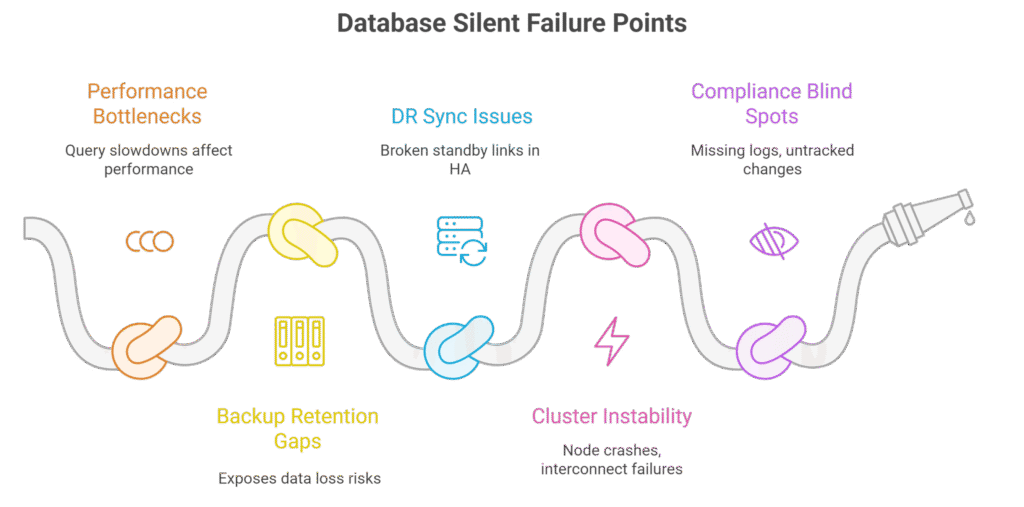
Common recurring risks include:
Performance bottlenecks — Query slowdowns, blocking locks, or uneven load across cluster nodes
Backup and retention gaps — Failed or incomplete backups exposing data loss risk
DR sync issues — Redo lag, archive log shipping delays, or broken standby links in HA setups
Cluster instability — RAC/sharded node crashes, interconnect failures, or quorum loss
Compliance blind spots — Missing logs, untracked system changes, or audit trail gaps
These issues rarely give early warning. They erupt suddenly, leaving IT scrambling, delaying business processes, and damaging operational trust.
QPH addresses these challenges by embedding its flagship IntelliPulse HUB (IPH) into the database infrastructure stack.
IPH acts as a real-time intelligence and remediation layer that assures availability, performance, and compliance across complex DB landscapes.
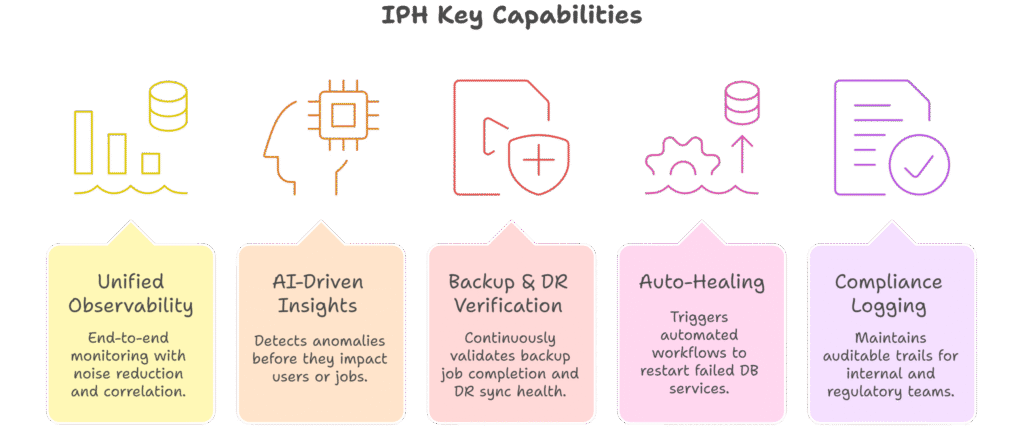
Key capabilities include:
Unified Observability
End-to-end monitoring of database instances, storage IO, cluster nodes, and replication pipelines, with noise reduction and correlation.
AI-Driven Performance Insights
Detects anomalies such as blocking sessions, CPU/memory spikes, and IO bottlenecks before they impact users or jobs.
Backup & DR Verification
Continuously validates backup job completion, archive log shipping, and DR sync health to prevent restore-point gaps.
Auto-Healing for Infrastructure Failures
Triggers automated workflows to restart failed DB services, rebalance RAC nodes, or reallocate storage/CPU resources on the fly.
Compliance-Ready Logging
Maintains auditable trails of availability, backup status, user access, and system performance for internal and regulatory teams.
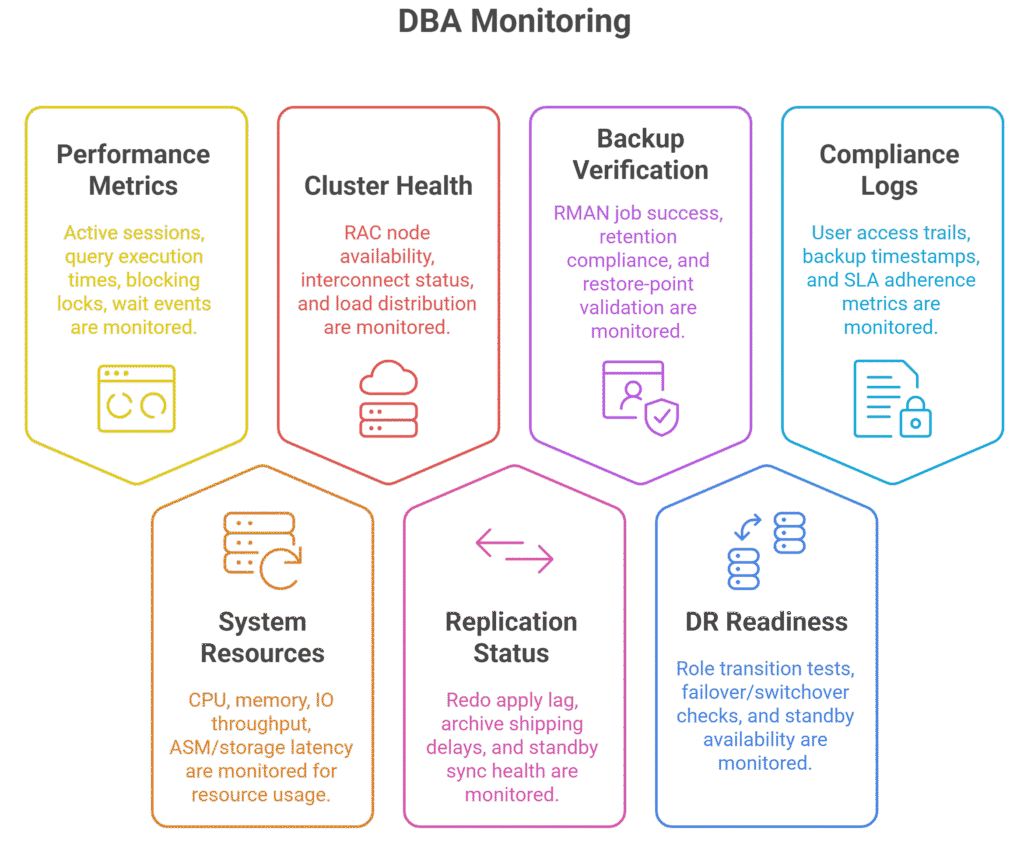
Performance Metrics: Active sessions, query execution times, blocking locks, wait events
System Resources: CPU, memory, IO throughput, ASM/storage latency
Cluster Health: RAC node availability, interconnect status, load distribution
Replication Status: Redo apply lag, archive shipping delays, standby sync health
Backup Verification: RMAN job success, retention compliance, restore-point validation
DR Readiness: Role transition tests, failover/switchover checks, standby availability
Compliance Logs: User access trails, backup timestamps, SLA adherence metrics
This 360° telemetry with AI-driven analytics lets DBAs move from reactive issue fixing to predictive assurance and proactive remediation.
With IPH safeguarding the infrastructure layer, enterprises gained a new standard of database reliability and operational trust:
High Availability: Databases stay operational even during node or system failures
Predictable Performance: Query and batch workloads run smoothly during peaks
Assured Backup & DR: Restore points and standby systems remain current and tested
Audit Readiness: Transparent, verifiable records of availability and data protection
Operational Efficiency: DBAs spend less time on firefighting and more on optimization
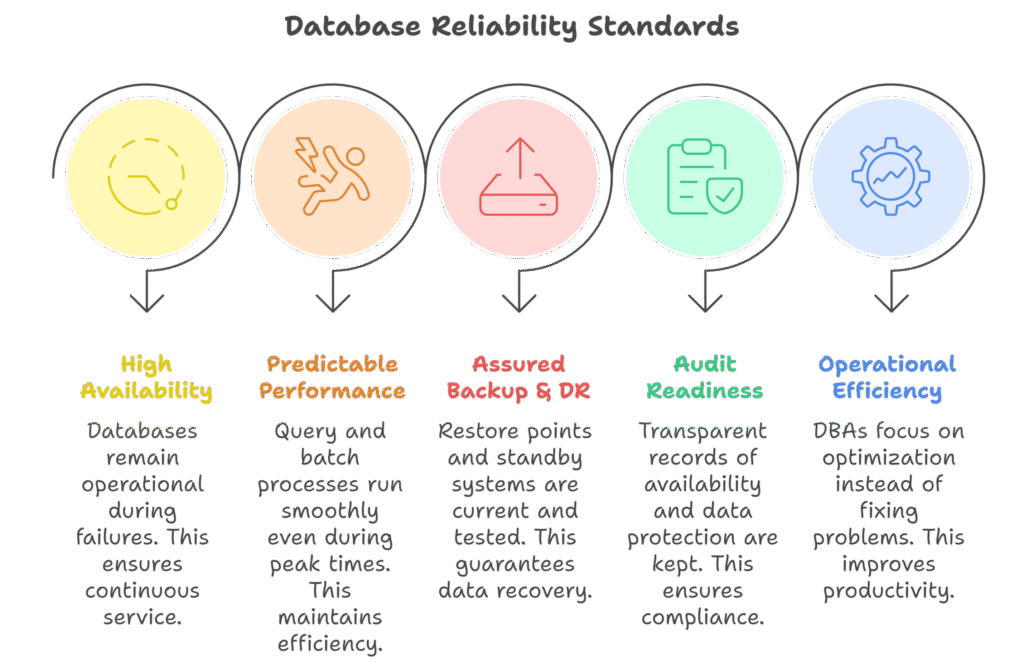
This shifted the organization from manual recovery cycles to proactive, intelligent database assurance — aligning IT operations with business continuity and regulatory goals.