Banking applications are the operational backbone of digital financial services.
They handle millions of daily interactions across:
Mobile banking and internet portals
Real-time payment gateways
Loan origination and approval systems
Credit/debit card transaction platforms
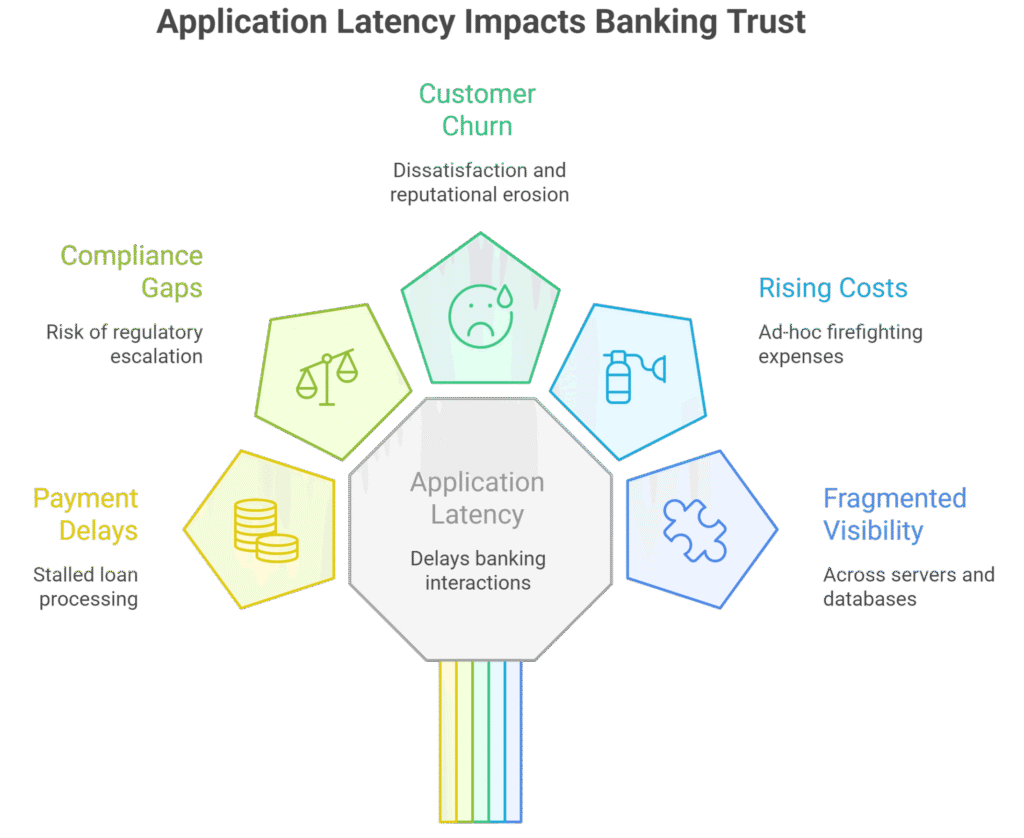
In this always-on ecosystem, performance is inseparable from trust. Even small delays can cascade into:
Delayed payments, stalled loan processing, and SLA breaches
Compliance reporting gaps and risk of regulatory escalation
Customer dissatisfaction, churn, and reputational erosion
Rising operational costs from ad-hoc firefighting
Fragmented visibility across servers, middleware, and databases
Traditional monitoring tools flag symptoms (CPU spikes, queue build-ups, slow API calls) but fail to correlate signals across the full stack. This leaves IT teams trapped in reactive troubleshooting and unable to prevent customer-facing performance issues before they escalate.
At a leading financial institution, the application servers that process high-volume customer transactions began experiencing severe latency during peak usage hours.
Response times slowed from milliseconds to several seconds
Customer transactions queued and timed out
Downstream settlement and reporting processes slipped past cutoffs
Compliance teams flagged delayed reports and potential SLA penalties
Monitoring tools showed scattered red flags but no clear root cause
Although systems stayed online, the degraded performance eroded customer trust and risked regulatory scrutiny — all while draining support teams in constant firefighting mode.
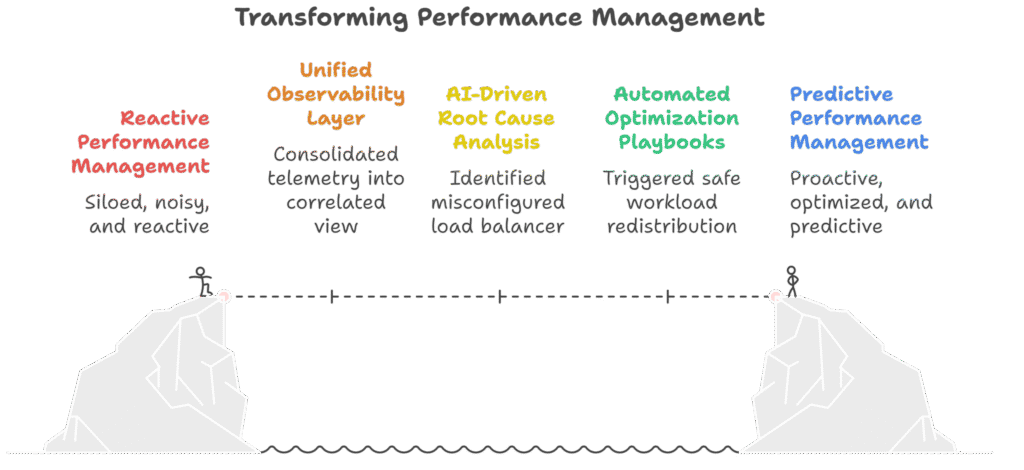
QPH deployed its flagship IntelliPulse HUB (IPH) to transform the bank’s performance management approach from reactive to predictive.
Key interventions included:
AI-Driven Root Cause Analysis
Identified a misconfigured load balancer that was routing requests unevenly and overloading certain nodes.
Automated Optimization Playbooks
Triggered safe workload redistribution workflows to dynamically rebalance traffic across clusters, restoring normal response times instantly.
Predictive Analytics Engine
Continuously learns performance baselines and pre-flags future bottleneck risks before they impact customers.
Within hours, the bank’s application response times stabilized and customer transaction flow returned to normal.
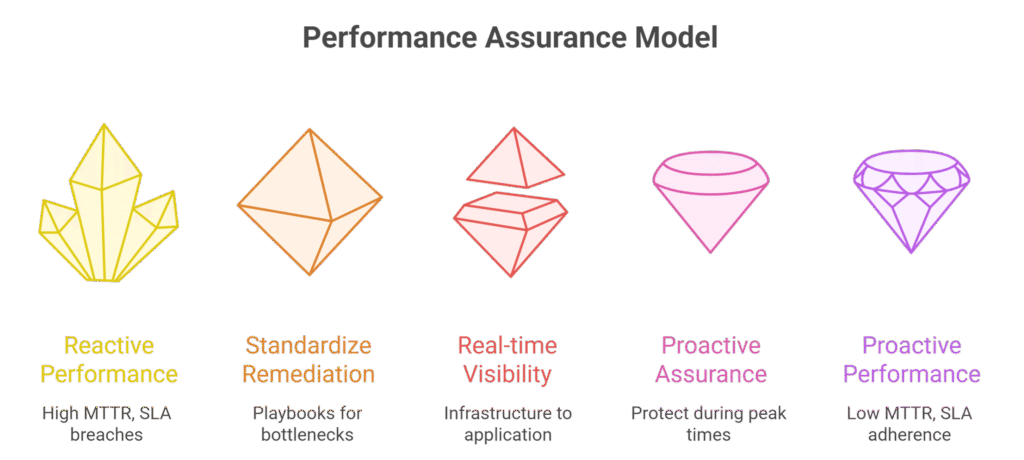
More importantly, the institution gained a repeatable and proactive performance assurance model:
70% reduction in Mean Time to Resolution (MTTR) for performance incidents
Dramatic drop in SLA breaches and customer complaints
Standardized remediation playbooks for future bottlenecks
Real-time visibility from infrastructure to application layer
Improved operational resilience and audit readiness ratings
The performance assurance framework now protects critical banking apps during high-volume peaks such as salary disbursal days, quarter-end settlement windows, and loan campaign launches — eliminating customer-impacting slowdowns.